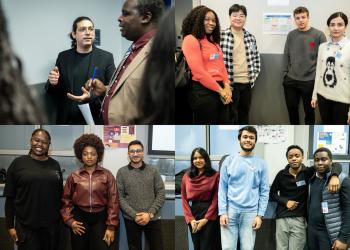
Students Explore Gender Equality in Business and Society During December Project Week
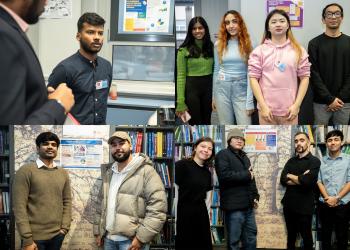
Students Showcase Innovative Solutions Through Posters
From 15 to 17 December 2025, bachelor’s students came together for Wittenborg’s December Block Project Week, placing gender equality at the centre of business and societal debate. Built around the United Nations’ Sustainable Development Goal (SDG) #5: Gender Equality, the three-day programme challenged students to critically examine real-world inequalities and develop research-driven solutions that promote inclusion, equity and sustainable impact.
Throughout the Project Week, students explored gender equality across a wide range of organisational and societal contexts, including leadership, pay equity, entrepreneurship, marketing and technology. Working with data and case studies, students applied analytical, creative and strategic thinking to propose actionable recommendations aligned with the targets of SDG 5.
Keynotes and Expert Perspectives
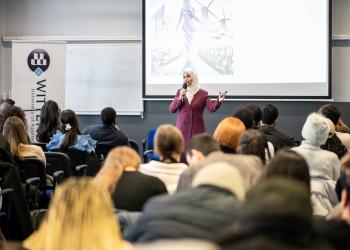
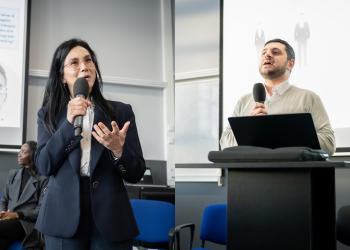
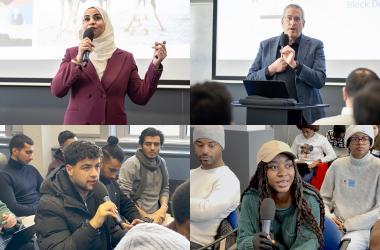
The Project Week opened on 15 December at Wittenborg’s Spoorstraat campus with an introductory session, followed by a welcome address from Wittenborg President Peter Birdsall. The programme featured a keynote speech by Noha Shafik, who engaged students in discussions around purpose, values and wellbeing.
Reflecting on her interaction with the students, Shafik praised their engagement and curiosity. “Your energy and vibe were amazing. The deep, insightful questions made me genuinely happy and reminded me why I love these conversations,” she said.
She explained that the discussions strongly aligned with her mission to raise awareness about discovering one’s values and purpose, staying connected to one’s authentic self and understanding how this supports wellbeing and life choices. Shafik emphasised her commitment to continuing this message across universities, companies, schools and communities.
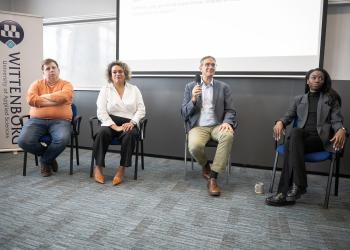
The keynote was followed by a panel introduction featuring Lucinda Douglas, Awura Abena Simpe, Robert Muster and Tim Birdsall, who later contributed video reflections on gender equality. They shared insights on leadership, organisational culture and policy in advancing gender equality within the workplace and beyond.
Later, Simpe, a soft skills expert specialising in Gen Z and Gen Alpha, highlighted the importance of an intersectional approach to gender equality.
She noted that women are not a uniform group and that differences in culture, age and neurodiversity must be considered when designing inclusive strategies. Simpe also stressed the growing importance of emotional intelligence in leadership, arguing that while artificial intelligence continues to develop, the ability to connect with and manage people will remain a key leadership advantage.
She encouraged students to focus on creating consistent and strategic impact, emphasising that progress is most effective when pursued collaboratively.
Douglas addressed the role of interpersonal skills in driving meaningful change. She highlighted the importance of challenging existing attitudes around gender equality and encouraged men to actively support and advocate for women.
Douglas advised students to take ownership of their personal and professional journeys, acknowledging that while progress can be challenging, meaningful change begins by taking the first step and “starting to write your own book”.
Birdsall emphasised the value of seeking diverse perspectives, encouraging students to look beyond their own viewpoints. He highlighted the importance of humility and openness, reminding participants that engaging with perspectives different from their own is essential to building inclusive and balanced conversations.
Research-Driven Group Work and Poster Presentations
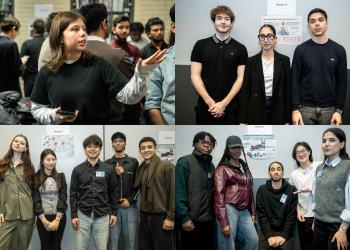
On 16 December, students worked in assigned groups to develop research-driven posters aligned with specific targets of SDG 5. The final day was dedicated to finalising and presenting these posters during the Project Challenge, where they were evaluated by a jury.
The poster presentations covered a broad range of topics related to gender equality in business and society. These included how organisations address harmful cultural practices, gender diversity in Fortune 500 companies with strategies to enhance representation and corporate initiatives to prevent workplace harassment, with examples from companies such as Amazon and Unilever.
Other projects examined microfinance for women and how access to credit empowers women, as well as solutions proposed by global leaders through corporate compliance and governance.
Additional posters focused on corporate strategies supporting work–life balance and caregiving responsibilities, universal access to reproductive health and the creation of safe spaces for women, equal rights to economic resources and the role of law and policy in advancing gender equality.
Together, the projects highlighted the complexity of gender equality and demonstrated the need for multifaceted and context-specific approaches to achieving gender equality.
WUP 19/12/2025
by Erene Roux
©WUAS Press
Tags