Wittenborg Staff Take Part in Refresher Training on Managing Challenging Situations
Staff Re-equip Themselves with Strategies for Confidence and Professional Communication
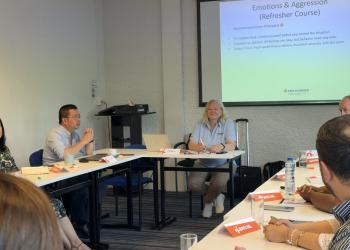
Staff at Wittenborg recently took part in a refresher training session focused on managing challenging situations with confidence and professionalism, reinforcing a shared approach to respectful communication across the institution.
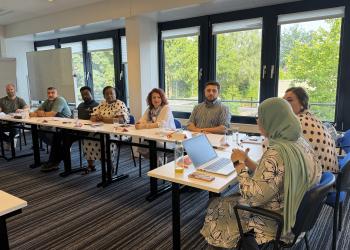
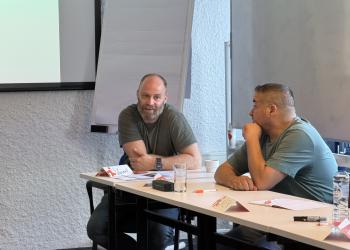
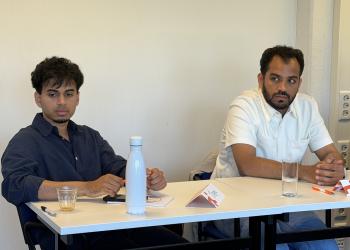
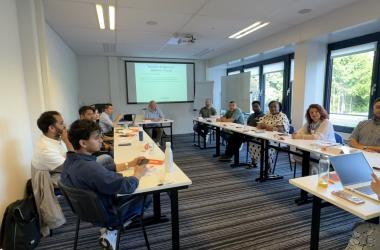
Held at Brinklaan, the session brought together colleagues from a range of student-facing roles, including tutors, exam staff and teams working in housing, finance, registry services, ICT and front-desk operations.
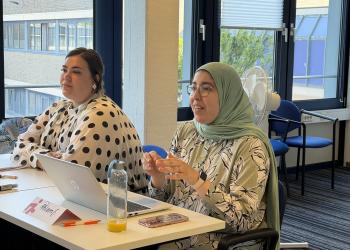
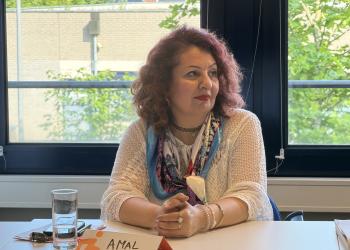
The training combined practical guidance with scenario-based exercises led by a professional trainer and a training actor. Participants worked through realistic situations drawn from everyday student services, allowing them to practise responding to tension, misunderstanding and frustration in a safe environment.
A key focus throughout was recognising early signs of escalation and maintaining calm, professional communication, not only to respond effectively in difficult moments but also to prevent situations from developing further.
Maike Zürcher, HR Manager, said the training forms part of a wider commitment to staff wellbeing and workplace safety.
“At Wittenborg we believe that staff wellbeing and workplace safety go hand in hand. We want our colleagues to feel confident, supported and equipped to deal with challenging situations when they arise. This training is part of our broader commitment to creating a working and learning environment where respect, professionalism and personal safety are taken seriously.”
She also highlighted the importance of communication in an international environment where expectations and styles can differ.
“As an international institution, we bring together people from many different cultural backgrounds, communication styles and expectations. Training such as this helps us navigate those differences constructively and ensures that challenging situations are handled with respect.”
The training also emphasised the importance of setting clear boundaries while maintaining a constructive approach.
“I hope participants leave with greater confidence in recognising when a situation is beginning to escalate and in responding appropriately,” Zürcher said.
Beyond techniques, the session encouraged reflection on how communication shifts under pressure.
“Moments of stress can influence how we communicate, often without us realising it,” she said. “Taking time to reflect on this can help us become more aware of how our words, tone and behaviour affect others.”
“For both staff and students, this awareness can contribute to more constructive conversations, especially when emotions are running high. It reinforces the importance of listening, respecting different perspectives and maintaining professional standards even in difficult situations.”
Rohan David, Support Office and ICT Administrator in Amsterdam, said the session was a valuable reminder of everyday practice in a busy environment.
“It was a valuable refresher, especially as we had the initial training a year ago. It is always good to be reminded of how to manage your emotions and maintain a calm, professional manner when communicating with others. In a busy front-desk environment where you interact with both staff and students throughout the day, this kind of awareness really helps in keeping conversations constructive.”
He added that one of the key techniques discussed was the importance of first helping the other person to calm down when communication becomes tense or unconstructive, before trying to resolve the situation itself. Participants also took part in exercises focused on regulating their own nervous system, including breathing techniques, helping them stay grounded and respond more effectively under pressure.
Wittenborg Dean Rauf Abdul later emphasised the wider importance of the training, highlighting the role of respectful communication and constructive dialogue within the academic community.
“We want students to know that we are always willing to listen, engage and work with them to find solutions. Constructive dialogue is far more effective than confrontational behaviour in achieving positive outcomes.”
He also underlined the broader educational responsibility of the institution in preparing students for life beyond student life.
“As an educational institution, we also have a responsibility to help students develop the professional and interpersonal skills that will serve them throughout their careers and in society.”
WUP 01/07/2026
by Erene Roux
©WUAS Press
Tags