Wittenborg Gains Insights into Erasmus+ Collaboration and Strategic Funding at Higher Education Day
Aydan Holtrigter Explores Erasmus+ Opportunities at Higher Education Day
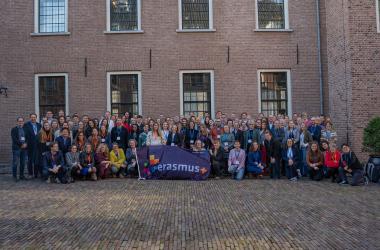
On 4 December, Aydan Holtrigter, Research Centre Manager at Wittenborg University of Applied Sciences, attended the Higher Education Day at Woerden Castle, an annual Erasmus+ event for Dutch higher education institutions.
The event brought together around 100 higher education professionals to explore how Erasmus+ can support resilience, innovation and European collaboration.
Erasmus+ as a strategic driver
The day opened with a keynote by Jorrit Snijder, President of the Executive Board of Breda University of Applied Sciences, who addressed the role of higher education institutions in responding to digitalisation and artificial intelligence. He emphasised that AI literacy is becoming an essential competence for students as AI will increasingly be part of professional practice.
Collaboration through BIPs and European Universities
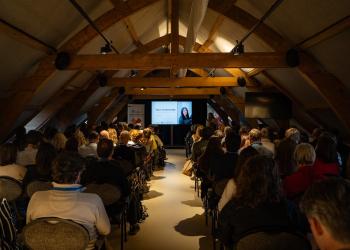
Holtrigter also attended the session ‘Powerful collaborations with Blended Intensive Programmes and European Universities’, delivered by Lydia Altenburg and Larissa Sluijk from the National Agency Erasmus+ (Nuffic).
The session focused on how Blended Intensive Programmes (BIPs) can be integrated into curriculum and how they can be used to strengthen international cooperation in a flexible and inclusive way. European University Alliances were presented as a framework for long-term strategic collaboration between higher education institutions across Europe.
Growing with fewer resources: a practical case
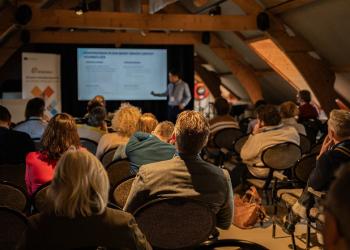
The second session attended, ‘Growing together with fewer resources: a practical case from Erasmus MC’, was presented by Michiel Louwerens of Nuffic and Raoul Tan from Erasmus MC, University Medical Center Rotterdam.
This session demonstrated how Erasmus+ funding can be strategically combined with other European and national funding schemes. Using concrete examples, Erasmus MC showed how an Erasmus+ programme can support sustainable partnerships, international mobility and capacity building while making efficient use of limited resources.
"The sessions highlighted that Erasmus+ offers opportunities beyond student and staff mobility alone," Holtrigter said. "Instruments such as BlPs, European University Alliances and the strategic combination of Erasmus+ with other funding sources can support international partnerships and applied research in a sustainable way."
The programme concluded with a plenary session on the upcoming Erasmus+ programme 2028–2034, followed by a networking reception.
Holtrigter noted that "the insights gained from the sessions will inform Wittenborg's strategy for international collaboration, innovative teaching and research partnerships, helping the school continue to strengthen its global connections and impact."
WUP 12/01/2025
by Erene Roux
©WUAS Press
Tags