TourXpeRience Training Explores How XR Can Transform Tourism Education
Educators Explore Immersive Learning Through XR, Pedagogy and Practical Scenario Design
How can educators prepare students for a tourism industry that is becoming increasingly digital, immersive and experience-driven?
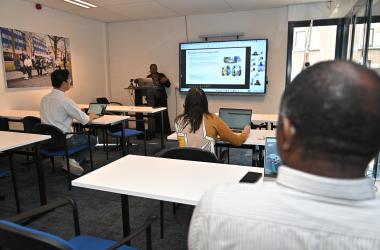
That question has been central to the first two sessions of the Erasmus+ TourXpeRience XR Teacher Training Programme at Wittenborg, where educators and trainers have been exploring the potential of Virtual Reality (VR), Augmented Reality (AR) and Mixed Reality (MR) to enhance teaching and learning.
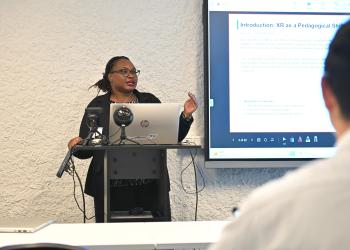
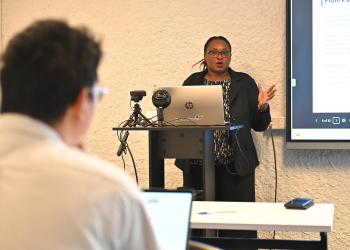
Led by Emmah Muchoki, Lecturer & Education Support, and Vajihe Shojaei, Assistant Professor of Applied Sciences, the sessions combined educational theory with practical discussions on how immersive technologies can be used to create meaningful learning experiences in tourism and vocational education.
Understanding the foundations of XR
The opening session introduced participants to the concept of Extended Reality (XR), an umbrella term that includes VR, AR and MR. Through examples and discussion, participants examined how each technology creates different forms of interaction between learners and their environments.
Muchoki encouraged participants to think beyond the technology itself and consider how immersive experiences influence the way people learn. Topics such as learner engagement, motivation, attention, reflection and knowledge transfer formed an important part of the discussion, highlighting the pedagogical foundations that support effective XR-enhanced learning.
The session also introduced participants to the TourXpeRience learning pathway and e-learning platform, where a series of learning modules provide additional resources and activities to support the training programme.
Transforming learning challenges into immersive experiences
The second session shifted from theory to application, inviting participants to consider how XR can be used to address common classroom challenges and create more engaging learning opportunities.
Led by Shojaei, the workshop focused on a key question: What makes an immersive learning experience worth designing?
Participants considered their own teaching practice and how learning objectives can be transformed into immersive scenarios. Rather than starting with technology, the workshop encouraged educators to begin with a learning challenge and then consider how VR could help students interact with it in a more practical and experiential way.
Examples included customer service situations, teamwork challenges and professional decision-making activities, where students could develop skills through simulated experiences that may be difficult to recreate in conventional classroom settings.
The discussions emphasised that successful XR learning design requires a clear educational purpose, ensuring that technology supports learning outcomes rather than becoming the focus itself.
Part of a wider European initiative
The training forms part of the wider Erasmus+ TourXpeRience project, an international collaboration involving partners from nine European countries. The initiative aims to modernise tourism and hospitality education through the integration of XR technologies while promoting sustainability, entrepreneurship and digital innovation.
Through its online platform, TourXpeRience provides multilingual learning resources, interactive modules and digital toolkits designed to support educators, trainers and learners in adopting immersive technologies within tourism education.
By combining practical workshops with online learning, the project offers participants opportunities to explore emerging technologies while considering how these tools can contribute to a more innovative and sustainable future for the tourism sector.
WUP 21/09/2026
by Erene Roux
©WUAS Press
Tags