Students Explore the Creative Reality Behind Global Brand Campaigns

Kirill Emelianov Shows Students How Visual Storytelling Comes to Life
MBM students at Wittenborg University of Applied Sciences explored how global brands build immersive visual campaigns during a recent guest lecture on integrated campaign development at the Brinklaan campus in Apeldoorn. The session was led by digital designer and founder of Gismo.tv, Kirill Emelianov.
The session explored how visual storytelling, design and production come together to shape global brand experiences for companies such as Tommy Hilfiger, Ray-Ban and Meta.
Emelianov, who works across CGI, motion design, commercials and VFX, moved beyond theory to show students what creative production looks like in practice.
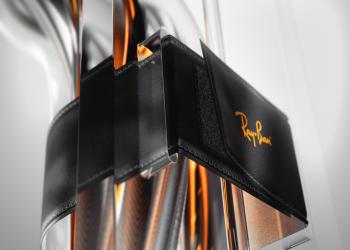
“The lecture centred around what it actually looks and feels like to produce visual content for brands, not the theory, but the real process,” he said. “We went through projects like digital installations for Ray-Ban, an interactive retail experience for Tommy Hilfiger, and concept development for Ray-Ban Meta Smart Glasses.”
He explained how modern brand communication is no longer limited to traditional advertising but increasingly focused on building immersive experiences across physical and digital spaces.
“Brands aren’t just running ads anymore, they’re building experiences,” Emelianov said. “Visual content is at the centre of that.”
A key theme of the lecture was the balance between creativity and constraint. Emelianov highlighted how production workflows, deadlines and client feedback are not barriers but essential parts of the creative process.
“Working creatively in the real world means working within constraints,” he said. “Deadlines, brand guidelines and budgets are not obstacles to creativity, they are part of it.”
The session also addressed how visual decisions shape meaning, from lighting and framing to sound and material choices, reinforcing the idea that visual content is fundamentally about communication rather than aesthetics.
Interaction with students was highly engaged, with many asking practical questions about client work, production decisions and how creative direction evolves during projects.
One discussion focused on the tension between technical accuracy and emotional impact in visual production. Emelianov described how even highly realistic work sometimes needs to be adjusted to “feel right” rather than simply look correct.
Another question explored the role of brand guidelines and how much creative freedom designers actually have within structured brand systems.
“There’s always interpretation involved,” he said. “Sometimes the most on-brand solution is something the brand book never explicitly describes.”
Emelianov encouraged students to focus on passion and process rather than outcomes alone.
“Find what you actually love doing,” he said. “This industry will test your patience, and what carries you through is enjoying the process itself.”
He added that working in visual production sits at the intersection of creativity and communication, where designers help brands connect with audiences in meaningful ways.
“That’s not a small thing,” he said. “It’s where creativity meets the human connection.”
Emelianov also encouraged students to continue exploring the field through practice, experimentation and storytelling across different media.
WUP 17/06/2026
by Erene Roux
©WUAS Press
Tags