
Exploring Champing: Wittenborg Researcher Uncovers a New Form of Heritage Tourism
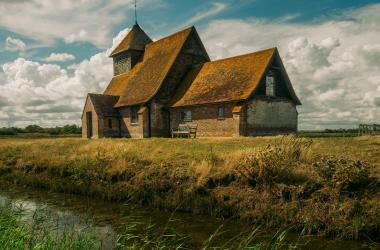
Adam Jones’ Study Analyses Overnight Stays in Historic Churches as More Sustainable Travel Experiences
A newly published study by Wittenborg associate professor Adam Jones explores Champing, a novel form of heritage-based tourism that involves staying overnight in historic churches. The article, ‘Champing – A Netnography Analysis’, co-authored by principal lecturer Francisca Farache from the University of Brighton, has been published in the open-access journal ‘Tourism and Hospitality’.
The research provides the first academic examination of Champing, a niche tourism concept that combines aspects of camping and staycations while supporting the conservation of heritage buildings. The study adopts a netnographic approach, analysing online promotional material and guest reviews from the official Champing website to understand how the practice is represented and experienced.
According to Jones, the research makes both a methodological and a tourism contribution. “Champing offers an innovative example of how heritage spaces can be repurposed for sustainable tourism,” he explained. “By adopting a netnographic method, we were able to capture authentic guest experiences and explore how visitors interact with these unique spaces.”
Heritage, minimalism and sustainability
Developed by the Churches Conservation Trust (CCT) in 2015, Champing, an abbreviation of “church camping”, allows visitors to sleep in historic churches across England and Wales. The initiative has grown to include 29 churches and more than 10,000 visitors since its launch. Facilities are intentionally minimalist: camp beds, lanterns and basic tea and coffee provisions. This simplicity, the study notes, contrasts sharply with glamping’s more luxury focus, instead emphasising authenticity, heritage and minimal environmental impact.
To analyse this trend, the authors conducted content and thematic analyses of the Champing website’s text, images and visitor reviews. This approach allowed them to uncover how the Champing brand narrative is both constructed and perceived.
The textual content analysis reveals that the practice is framed in two key ways: first, by associating it with the nostalgic aspects of a staycation and the desire to experience the unusual; and second, by highlighting the sites’ cultural and historical aspects, as well as their proximity to natural attractions.
The imagery on the website reinforces a minimalist aesthetic. The most prevalent pictures feature the camp beds, basic kitchens and church interiors. This is complemented by traditional church features like stained-glass windows, entrance doors and exterior views, which ground the experience in its historic setting.
Through the thematic analysis of 142 online guest reviews, the researchers identified three dominant themes shaping the Champing experience: Peaceful, Explore and Novel & New. Guests frequently described their stays as calming and restorative, often citing the atmosphere of the historic churches and their connection to local nature and culture.
Jones said these findings align with broader trends in sustainable and slow tourism. “Many travellers are looking for experiences that feel real, rooted in history and community and less commercialised,” he noted. “Champing reflects that shift, providing visitors with opportunities to unwind, explore local heritage and engage with the environment responsibly.”
Linking to broader tourism trends
The paper situates Champing within the academic frameworks of camping and staycations, both identified as under-researched areas in tourism studies. By doing so, it highlights how Champing expands the outdoor hospitality portfolio and contributes to debates on authenticity, minimalism and local tourism.
Staycations – holidays taken close to home – have grown in popularity due to environmental awareness and the desire to avoid overtourism. The study suggests that Champing could serve as a model for sustainable tourism, supporting local economies while preserving cultural heritage.
“Overtourism has become a pressing issue for many destinations,” Jones said. “Champing offers a counterpoint. It’s small-scale, local and experiential travel that benefits communities and reduces environmental pressures.”
Relevance to the Netherlands
While the study focuses on the UK, Jones points out that similar developments are emerging in the Netherlands. This has been done through non-profit organisations such as Alde Fryske Tsjerken and Groninger Kerken, which have pioneered the adaptive reuse of churches as artists’ studios, community cafés, concert venues and visitor accommodation. These initiatives contribute to the country’s evolving Salt Path, a new long-distance trail linking cultural and natural heritage sites.
“This kind of adaptive reuse aligns closely with Dutch approaches to sustainable tourism and community engagement,” Jones observed. “It’s an inspiring example of how heritage assets can remain living parts of society rather than static monuments.”
WUP 22/12/2025
by Ulisses Sawczuk
©WUAS Press
Tags